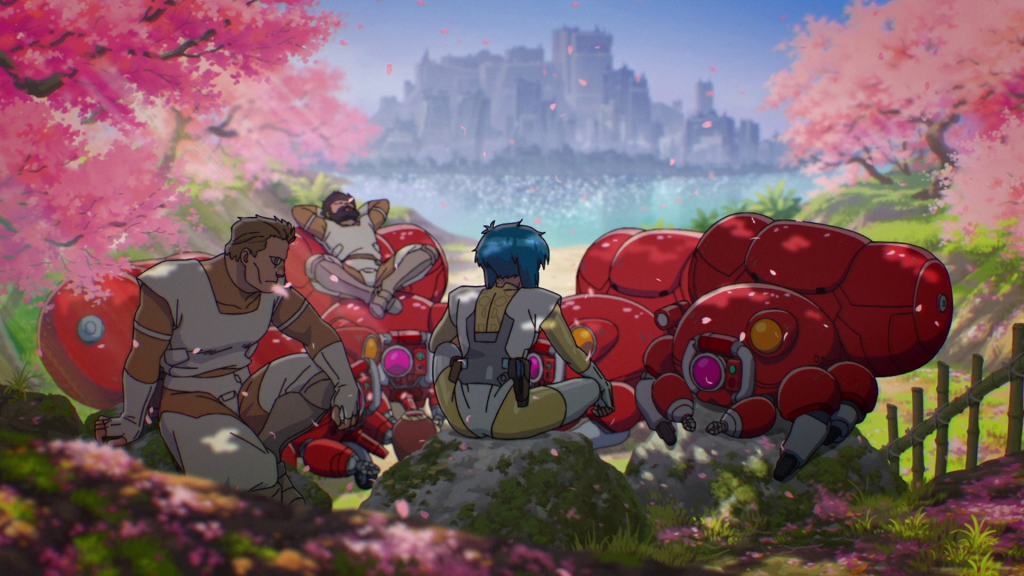
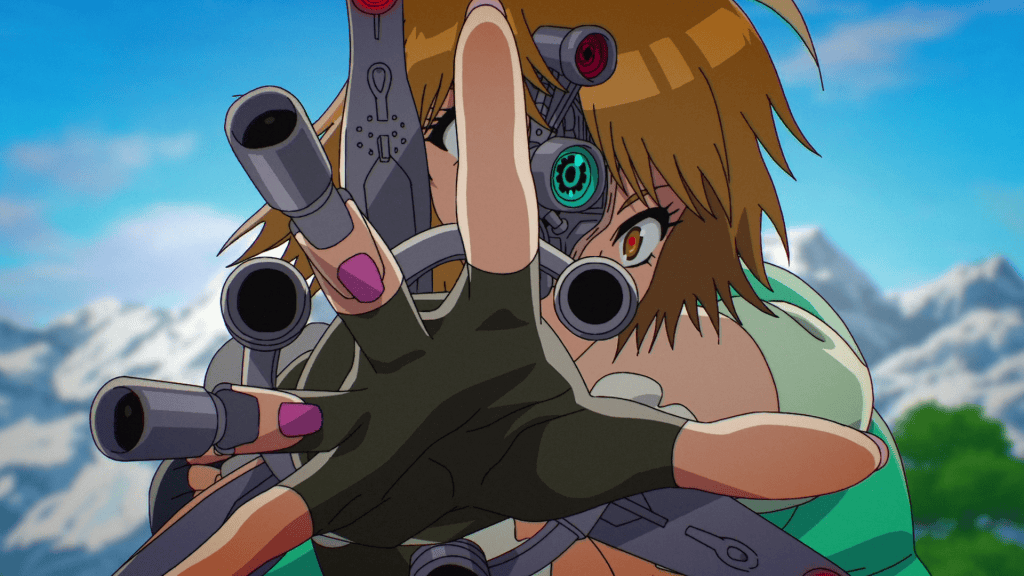
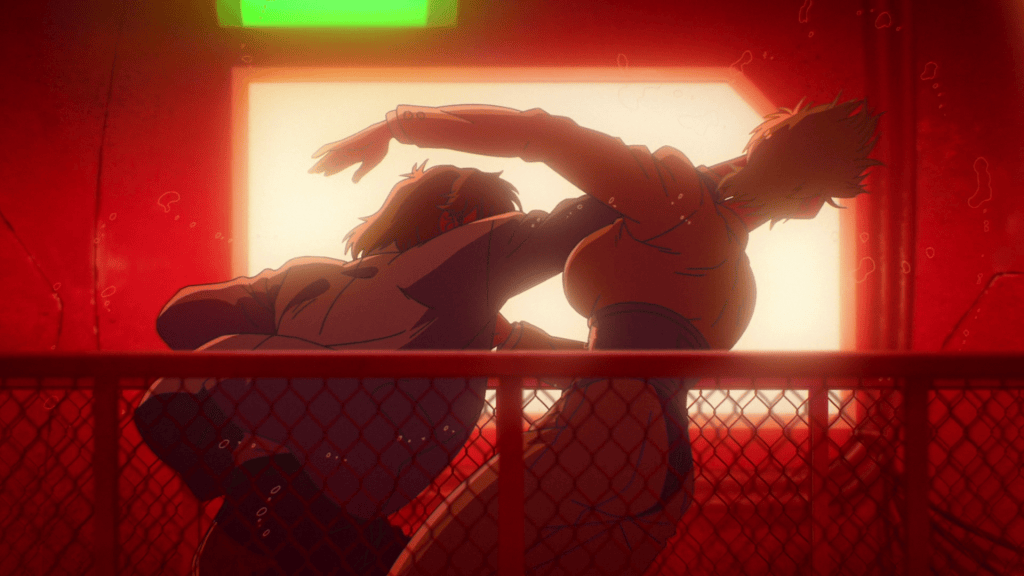

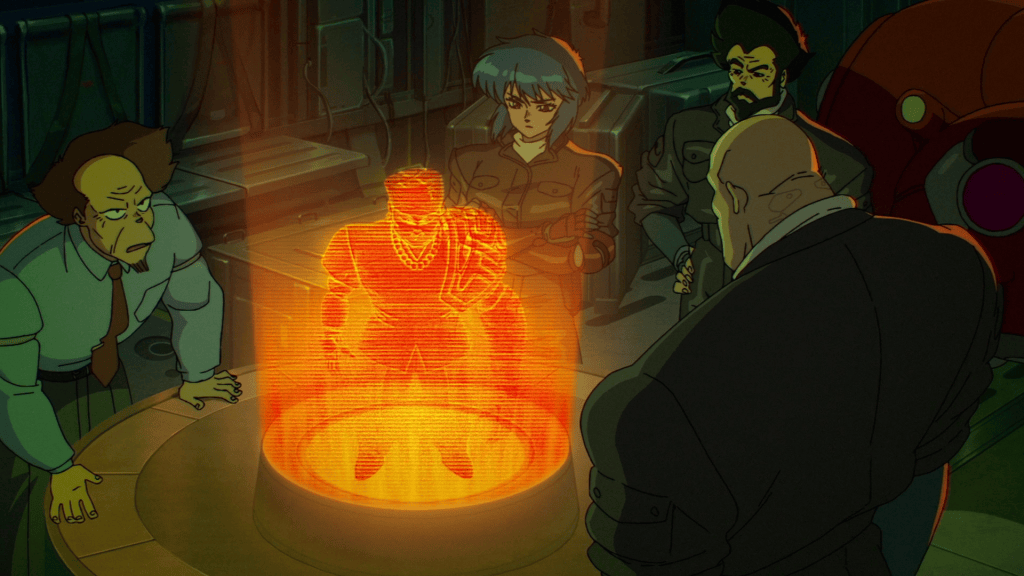
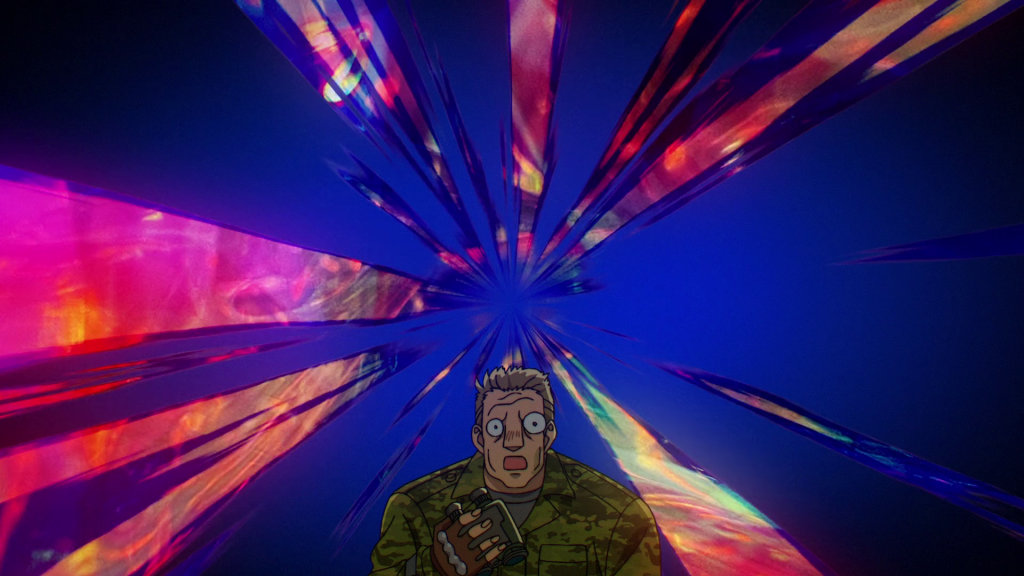
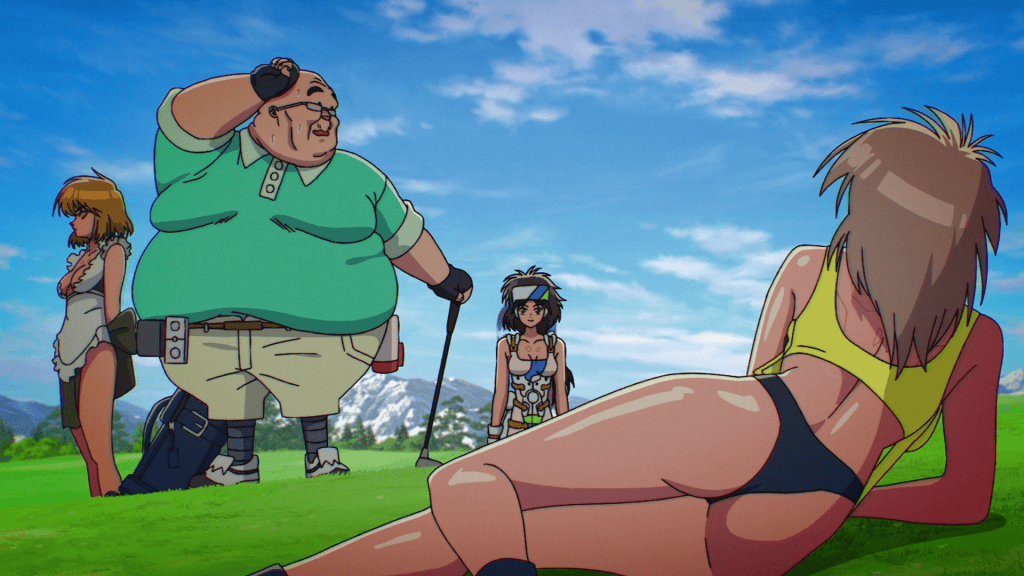
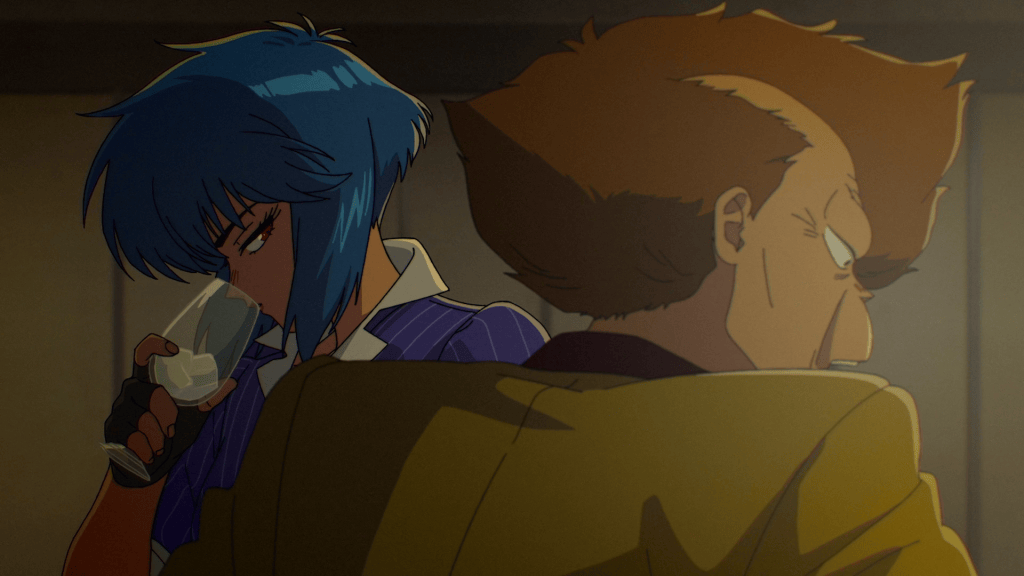
2026 has been a good one for stylish anime, with GITS2026 leading as possibly THE most joyous and fully malleable stylized TV animation of ’em all. Ever willing and daring to push the boundaries of its character models, smashing together wild color combinations, overwhelm the viewer with visual density and stretch what you thought was possible or allowed in a GITS adaptation ’til now. Constantly oscillating between classic western-coded cartoon goofiness and modern reliable Japanese finessed appeals that makes it a potent stylistic melting pot for beat-by-beat expressively free cyberpunk animated entertainment.
The hyper stylization and information overload is definitely in step with the manga from the small pieces I’ve read (though shamefully sits on my shelf collecting dust right this minute), where the world’s technobabble is so bursting at the seams that it bleeds into the margins around the panels, with each page cluttered up with both visual compactness in its line work and text, while relying on strong compositions, character drawings and action paneling to carry you through its legendarily immersive and overwhelming world. This adherence to the essence of the manga translates into a density and variety of style and speed of information unlike any other on TV, while retaining the action’s clarity and strength of character presentation to anchor us in something recognizable enough to latch on to in all that visual and informational chaos. That adherence to its source comes with the cost of its largest fault of the entire thing: the breakneck pacing and constant mission/world-critical exposition that leaves oh so little time to really gel with most anything or anyone outside the Major in this whole work. It’s not a fatal flaw, it’s just a trade-off and it can be a fairly sizable one for most narrative-seeking people, even if the whole thing IS inherently super watchable on the face of it due to all the visual saturation and spectacle.
Personally, that trade-off resulted in the show prioritizing my fondness for color, shapes, variety and movement as well as my never-ending hunger for rewatchability, which is what I seek in any and all media these days, as I don’t like even a hint of disposabilty of one-and-done understood and digested experiences that lack that density or appealing media-pushing uniqueness.
It never felt like a hollow experience despite feeling lacking in narrative clarity and overall structural and thematic punch, and seeing the cyberpunk fantasy of individuals outsmarting overbearing unforgiving webs of political machinations and various ruling factions was always a satiating thematic fantasy draw on the weekly. I would have liked it to be less cowardly and cartoonish in how it depicts the actual forces and cycles of abuse that permeate each and every mission, all too often romanticizing the efficiency of the individual cells of the police-state while undermining the victims for gags or showmanship.
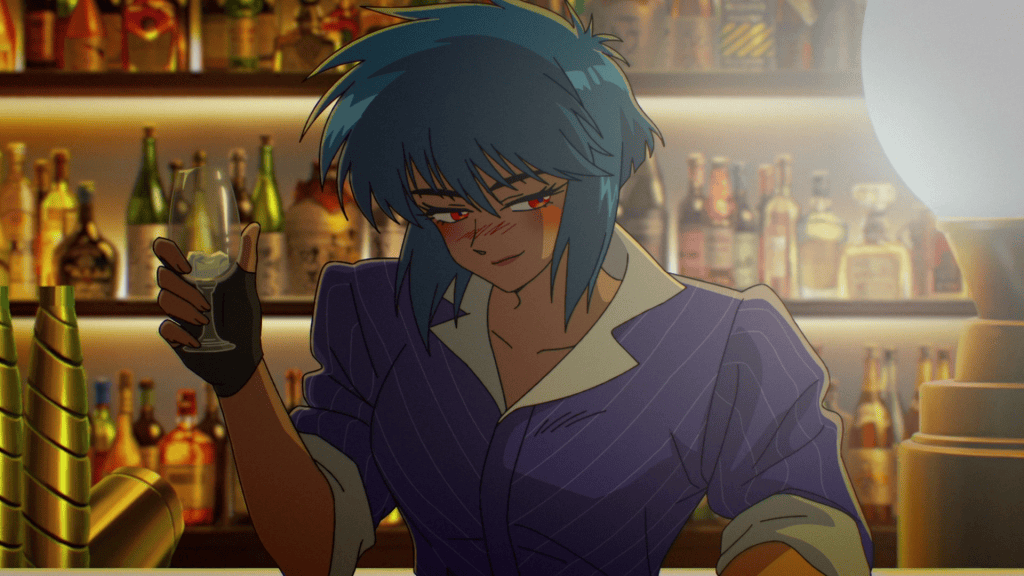
The anchor and balance of that fascist romanticiziation and individual-excellence fantasy in all the stylistic overstimulation was, of course, the Major, who is a one-woman-army with no genuine ties to the inherent self-justification networks of the corrective ‘justices’ that are carried out. She wants to mostly just get hers and enhance the good of her team and… gods it is refreshing seeing her being an absolute brazen mess who has contingencies for her messes to both make up for her strategic flaws and leans into her personal flaws. The biggest plus to her overhauled (or original) personality here is to finally get to see her being a lesbian absent-overworking-failure-mommy to her lovers, who are into her and idolize as much as we and the show’s camera and composition do.
Major’s arc here is fascinating as it uses about half of its earlier runtime to have her be ‘the best at what she does and what she does ain’t so nice,’ before throwing the Puppet Master into the mix to challenge her into evolving into something more and truly cyber beyond all the systems and politics that string her and everyone around her along at any given turn. Despite the added space for this second half of her story to breathe in comparison to the sweetly under-90-minute 1995 film, it ironically feels like it doesn’t dive as far into her mind and soul as the shorter ’95 adaptation does. GITS2026 does make her more rounded emotionally as a person in many ways (most of them being delicious character flaws) that makes her stand out from the film iteration, so both have their own very human takes on fleshing her out that makes either adaptation worth their weight in gold when all is said and done.
I also can’t put my finger on it, but this version of her feels less trans coded or trans relatable than her film version, but it makes up for it in her sheer lesbian goofball energy (she’s a switch if I ever saw one, though we only see her being her best bottom self).
All in all, while dense in its spectacle and conveyance of information, the 2026 adaptation is at the end of the day, setting its sights on being bombastically entertaining over diving its ghost into anything too substantive for too long while fulfilling any and all wishes to see the Major kick all the ass. It’s not the deepest or the most spiritually or politically satisfying cyberpunk anime it could have been, nor does it re-invent the wheel for the genre, which is a bit disappointing given the increasingly cyberpunk state of the world this adaptation finds itself released into. But it is a delicously grand distraction from our own hardwire hell with its cartoonish and free expression of a foundational text of the genre’s visual language. What can I say except it is an absolute joy from start to finish and one’s heavenly expectations for anything GITS are more to fault for its perceived lack of anything substantive in relation to today’s ‘advanced’ dystopia than the show itself.
Science Saru also deserve godly status for not just delivering this at such a consistent and eyeball obliterating quality, but also for simultaneously releasing the even more interesting Jaadugar: A Witch in Mongolia. They’re titans, I tell you.
 Home
Home 
Leave a comment